
A Child is Born
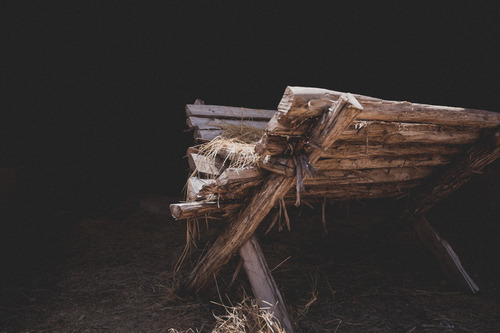
“While they were there, the time came for her to deliver her child. And she gave birth to her firstborn son, wrapped him in strips of cloth, and laid him in a manger, because there was no place for him at the inn.”
This is the account of the birth of the Savior of the world and of Mary, His mother. One sentence: “… and she gave birth…”
Luke’s account reads as though it was written by a man. Mary walks into the barn, the baby comes out of her, they wrap him in cloth, and then place him in a manger. To be fair to Luke, Mary may have been very reluctant to talk about that part of the story, but there is a novel here if we read widely between the lines of what Luke has written.
A Baby Leaps
After the angel departs, Mary quickly goes to Judah in the hill country to visit her cousin Elizabeth, who just happens to be pregnant with John the Baptist. The songs they sing when they see each other are glorious, but imagine what these two talked about for three months as they sat together (Kelly said, “probably what they were going to cook that night”). She may be right, but both carry children of promises—promises given and fulfilled by the Lord. Mary was visited by an angel and is pregnant by the Holy Spirit. Elizabeth’s husband was visited by Gabriel and struck dumb. Her pregnancy is a miracle in itself since she has always been barren. In Elizabeth is the Herald, the one who will proclaim, “Behold, the Lamb of God who takes away the sins of the world!” and who leapt at the sound of Mary’s voice. In Mary is the one whom John will proclaim, proving him right. Jesus and John were friends from day zero.
Mary stays with Elizabeth for three months and leaves just prior to the birth of John. We are not told why she leaves instead of staying to help, but when a woman helps with such things, and there is blood, she is ritually unclean for a good while. She may have worried about being in this state while carrying the Son of God, or maybe it was just time to go.
So Mary returns home. She had a glorious visit with Elizabeth, but now she has to speak to the man she is to marry, and she is very pregnant with a baby that is not his. Joseph and Mary meet, and she tells him the good news, which is good news, but not so much to Joseph. There is no record of this meeting, but Joseph must have been beside himself. When did this happen? Who is the father? Was she attacked on her trip to Elizabeth’s? All of these questions and more. He knows that how he responds to this news may determine whether Mary lives or dies, but he is an honorable man and plans to divorce her quietly. Besides, she is obviously mentally unstable since she believes that her baby is the Son of God… that God made her pregnant.
Mary was distraught. Now what? She carries within her the Son of the promise. She is pregnant by the Holy Spirit, and now she is alone and will have to raise the child herself. She prays and God hears her prayers. The next night, Joseph has a dream. The spirit intervenes and makes it clear that he should marry her. Imagine Mary’s joy when Joseph tells her that he was visited by an angel from the Lord and that he’s staying. They marry soon after, but everyone in their hometown has done the math, and when it is time for her to give birth—just six months after the wedding—people start to talk. Rumor travels fast, and shame faster. Later, much later, the humiliation of her “illegitimate” pregnancy is even visited upon Jesus Himself. But Joseph and Mary have been chosen by God, so what does it matter what others think?
Mary has friends and family who will help deliver the baby. Joseph won’t be involved since men never are. It’s how things are done. She has arranged the details of the delivery, and everything is in order. She is nesting and getting everything ready for the arrival of her miracle Son. The Son that Elizabeth’s baby recognized. The Son of the promise. She is ready.
Then the census.
Joseph will go alone to his hometown of Bethlehem. Since the Romans only care about counting the men, it’s prudent and right, and really the only sensible thing to do. He will run up, be counted, and be back in time for the birth. Mary begs Joseph to stay—the government be damned—but since he’s determined to go, she will go too. All Israel hates their oppressors, but especially so when it encroaches upon plans, long-laid plans. Nine months in coming plans. God’s plans. Joseph pleads with her to stay, and if the baby comes while he is gone, she will be cared for. Besides, everything is ready and the plans are set. But God has different plans.
For out of Bethlehem will come a shepherd.
So, they go. Mary, a few days away from giving birth, climbs upon a donkey and makes the long trek to Bethlehem. She is very pregnant and very uncomfortable. There are no rest areas with clean restrooms. There are no nice places to stay as they travel. She is used to the harsh conditions of travel—it was farther to Elizabeth’s when she visited her a few months back—but she wasn’t so pregnant then. They sleep on the ground, eat what they bring, and look forward to a nice place to lay their heads when they reach Bethlehem.
They arrive tired and weary, and Mary wants nothing more than to take a bath and then lie down and sleep, but there is no place to stay. They travel door to door, but every room is taken by men who have walked for days to return to their hometown for the census. Relatives have prepared food and drink for their arrival, and now they drink and revel—drunken men, cursing the census, the Romans, and lamenting God’s delay in bringing a king to overthrow the evil regime. Joseph stands at the door, with Mary beside him, carrying the very king they hope for, and asks for a place to sleep. No one gives up a room for a woman, especially one who is so very pregnant, and questionably pregnant at that. As hope wanes, one family shows them pity of a kind. She can stay in the barn.
Away in a manger, no crib for a bed. No truer words have been spoken. Joseph opens the barn door and must have questioned their sanity in agreeing to this. He must have tried to convince her that this was no place for her to stay. She deserves better than this filthy place among the animals. Mary is more practical and, I’m sure, so very tired. She has been through a lot—one night in a barn will not be any more of a trial than she’s already endured. Besides, her time has come. Her water has broken. The baby is coming!
Wait, what? Joseph must have panicked. Put yourself in his place for a minute. He has never seen a birth or even talked about a birth with anyone—ever. Only midwives did such things, not “midmen.” This is the woman he loves, whom he is married to, and who will probably die tonight because there is no one to help.
But Mary knows what to do. She has helped others through this. Besides, this is the Lord’s child. He will protect. Joseph runs through the barn looking for a place—any place—for Mary to lie down that is clean, but there aren’t any. It’s a barn full of dirty, filthy animals. There is a horse, an ass, oxen, and surely sheep and goats. Everything is filthy.
Joseph finds a stall that is cleaner than the rest. The Lord is near. He moves one animal with another, gathers hay and straw to make a softer place to labor, and helps Mary into the stall. He closes the gate behind them for privacy in case the owner comes in. He has no need to worry. She leans against the wall, waiting for her husband to finish fussing. Joseph lays the blanket on the floor and helps Mary onto the hay. Is she comfortable? Is that even possible? Then labor begins in earnest.
Is it a slow, long labor or short and fast? No one knows. Luke says, “she gave birth,” but no woman just “gives birth.” It is a process, whether long or short, and it is painful. I wrote that last sentence as a man, but the pain of birth should never try to be explained by a man. Mary may have told Luke all the details of the birth—mothers are given to recount such things since it’s such a profound and painful experience—but men are reluctant to really listen since none could ever give birth and then choose to give birth a second time. Women are tougher by far than men. Luke may have marveled at her words but thought it better to just give the account in one line and let the hearers fill in the blanks on their own.
Her labor is not easy, since they never are, and she is young and, from all the paintings I’ve seen, a small woman. Joseph is out of his element. This is the first time he has seen her nakedness and isn’t sure if he should be looking or not. He hesitates, but Mary is in pain. He asks if he should go get help? Who would help? No one has helped up to this point. Mary must have shaken her head and given him that look that all women give when they are questioning the wisdom of their husbands. There is no one to help but Joseph. Mary, the one needing comfort, must have had to comfort and coach him.
And then, a baby.
Joseph was the first to see his son—all bloody and perfect. They laughed and cried with relief. They had done it. She had done it. It was finally over. He was here. It is finished. Mary tells Joseph how to deal with all that comes after a baby is born. It isn’t a matter of simply standing up and going about her business. There are many things that have to happen after the birth of a child. In a hospital, all is taken care of. Everything is taken care of. But not in a barn. The umbilical cord, the things that happen after the baby, that men are loath to talk about, and the cleaning of the child—all is done by Joseph. But the babe is here.
He lays his son, God’s son, on Mary’s chest, and in silence, they cry. He prays, worships, and thanks God for a safe birth and a dry, warm place to have the baby. The surroundings disappear, and only Mary and the baby are present.
Mary is a mother now and begins to mother. She finishes cleaning him and then wraps him in cloth and hands him to Joseph so she can clean herself. Joseph puts his son, God’s son, in a feeding trough. He has found clean straw for the bed.
Then people begin to arrive—shepherds and rich men, but there is no drummer boy because no one wants to hear drums in the calm of the night. Joseph is apprehensive at first and reluctant to let people in to see his son, but they assure him that they have been sent by God to worship this new babe. Mary is sitting up now but not rested, and she marvels at all that is taking place. She treasures all of this in her heart. Joseph is the gatekeeper, and when it is time, he takes them outside to let Mary sleep.
The men talk in the darkness. The wise men press the gifts they have brought into Joseph’s hands. It is more wealth than he has ever known. He refuses at first, but they assure him that it is what the Lord has asked them to give. It will be enough to buy land, build a home, build a business, provide for his family, and though he doesn’t know it, to flee from Herod. Joseph is grateful.
The people in the house stare out their window at the spectacle that is taking place in their backyard. Caravans of people stream through their front yard and into the barn. It’s a homeowner’s nightmare.
A story for the ages.
Mary holds in her heart the best birth story ever told. No other woman, in the history of women, will have one to top hers. Who else gave birth to God’s own son in a barn with no help other than that of her new husband? Her son is the Child of the promise. He is gentle and lowly, by His own admission, and the circumstances of His birth reflect this. Surely the King of David would be born in a palace, not in a stable. What other God, but our God, would choose to come into the world in the same way as we… No, I take that back—in far worse circumstances than we.
He knows us because He was us once.
 Tie Flying